Antichamber
Alexander Bruce / January 31, 2013 / Rated Unrated
Data last updated September 29, 2026
As an affiliate, PixelScry may earn a commission from qualifying purchases made through these links.
System Requirements (PC) ↓
- OS *:Windows XP SP2, Vista, or Windows 7
- Processor:2.0+ GHz or better (dual core recommended)
- Memory:2 GB RAM
- Graphics:NVIDIA 8000 series or higher (Shader Model 3 Compatible)
- DirectX®:9.0c
- Hard Drive:1 GB HD space
You control a nameless and faceless protagonist, who starts in a white chamber in the center of a high-tech maze. Your goal is to move forward through the maze by solving many difficult and intricate puzzles. Antichamber reminds Portal game series and Cube films to some extent, but with more emphasis on puzzle solving, sketchy graphics, and very little plot. Unlike in Portal or Cube, the protagonist cannot die, even if the player fails. There are no traps, and the only penalty for failure is that you have to try again. The protagonist is armed with a variety of “guns”, each of them allows you to manipulate a certain set of objects in the maze.
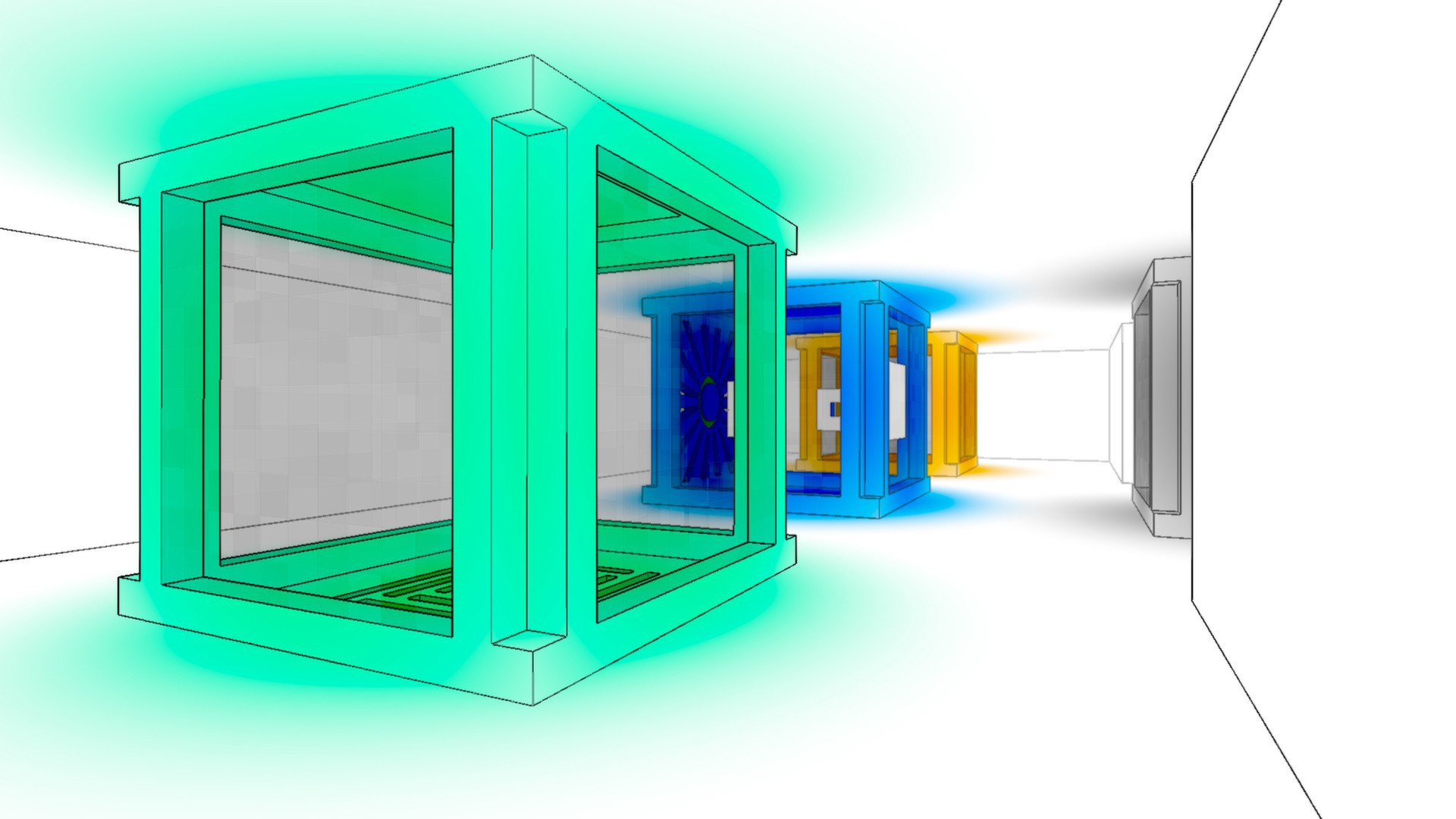
Antichamber is defined by its impossible, non-euclidian geometry that bends 3D space in the ways not found in the real world. All the regular laws of physic do not apply in this place that seems to be straight out of M. C. Escher's drawings. Doors can become portals leading to an unpredictable place, or even different places, depending on how you enter them. The visual style of Antichamber is very minimalistic. Walls, doors, and ladders are only outlined with sketch-like black contours, while any color serves to attract the player's attention to a certain object. Everything else is blank white, which makes for a cold, neat atmosphere of a math exercise.
Antichamber is a first-person puzzle-platform game created by Australian developer Alexander "Demruth" Bruce. Many of the puzzles are based on phenomena that occur within impossible objects created by the game engine, such as passages that lead the player to different locations depending on which way they face, and structures that seem otherwise impossible within normal three-dimensional space. The game includes elements of psychological exploration through brief messages of advice to help the player figure out solutions to the puzzles as well as adages for real life. The game was released on Steam for Microsoft Windows on January 31, 2013. A version originally sold with the Humble Indie Bundle 11 in 2014 added support for Linux and OS X.
Read more on Wikipedia →Available on Steam
More like this